
Origins & name
"Bamiléké" is a collective term for a loose aggregation of roughly one hundred kingdoms and chiefdoms of the eastern Grassfields in Cameroon's West Region. The name likely derives from a colonial-era mispronunciation of "Mba Lekeo" — "the people down there." Among themselves, Bamiléké identify first by kingdom and village; to others, they are one family.
Land & people
The Bamiléké plateau stretches between the Bamboutos Mountains and the Noun River — high-altitude prairie, rich valleys, and volcanic soil across seven administrative divisions. Scholars estimate the Bamiléké make up a quarter or more of Cameroon's population, with millions more in cities and abroad.
Kingdoms & society
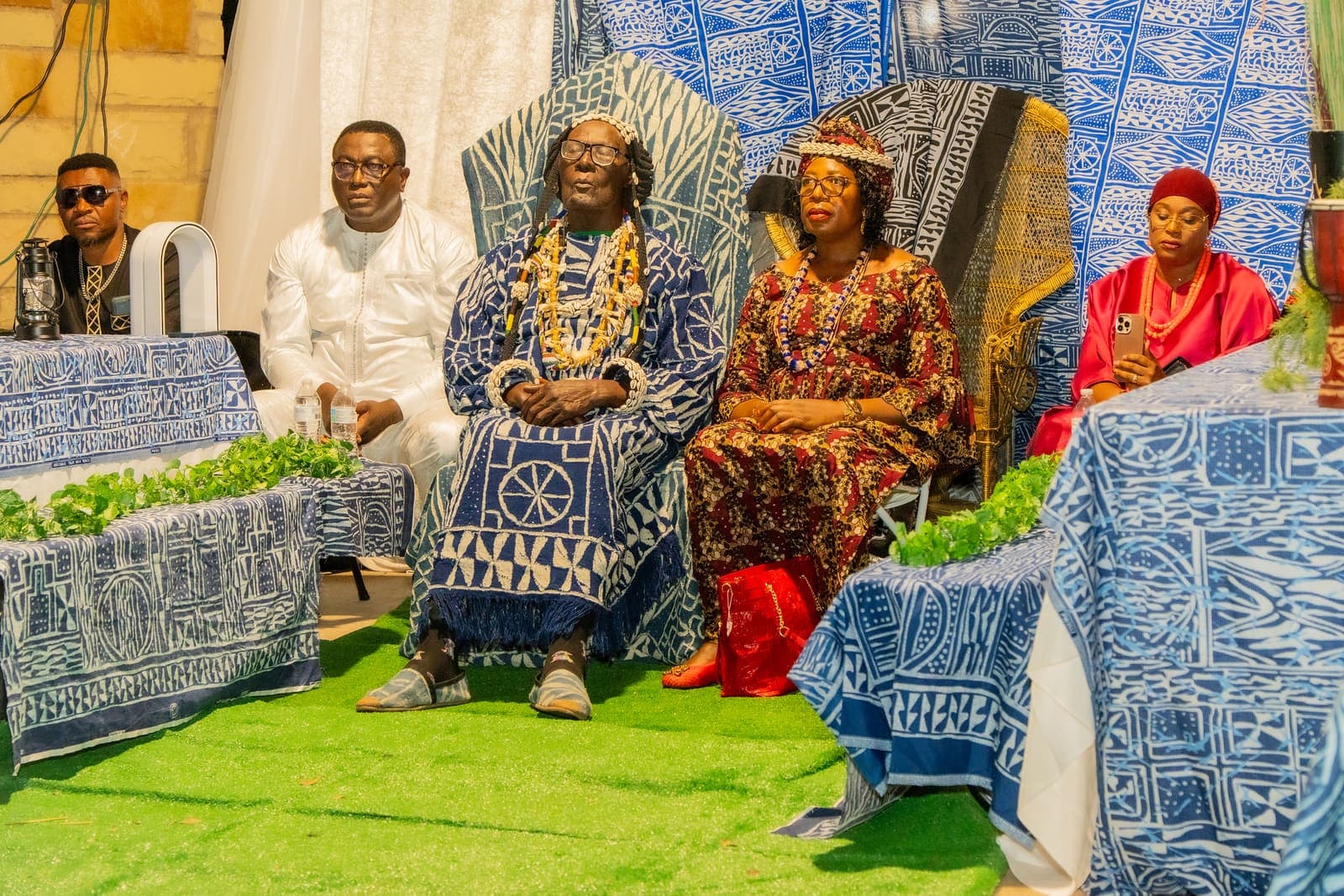
The earliest kingdoms formed in the sixteenth century. Each is led by a king — fo, fon, or mfen — counseled by the nkam be'e, the council of nine highest nobles, and by societies of titled notables. Dual descent, praise names, and lavish death celebrations bind families across generations; kingdom-specific associations like LAFABA bind them across oceans.
Arts & Ndop cloth
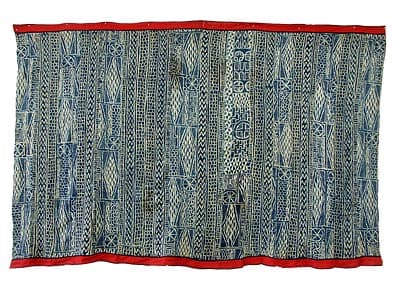
Bamiléké artists are famed for beaded thrones, carved house posts, elephant masks, and the indigo-and-white royal display cloth called Ndop — the pattern woven through this website. Music of the secret societies, played on drums, balafons, and whistles, echoes in Cameroonian pop today.
The diaspora
Emigration has shaped Bamiléké life for over a century. Voluntary associations link urban and overseas communities socially, politically, and economically to home — "a foot in the land of the ancestors." LAFABA-DFW is that foot, planted in Texas.